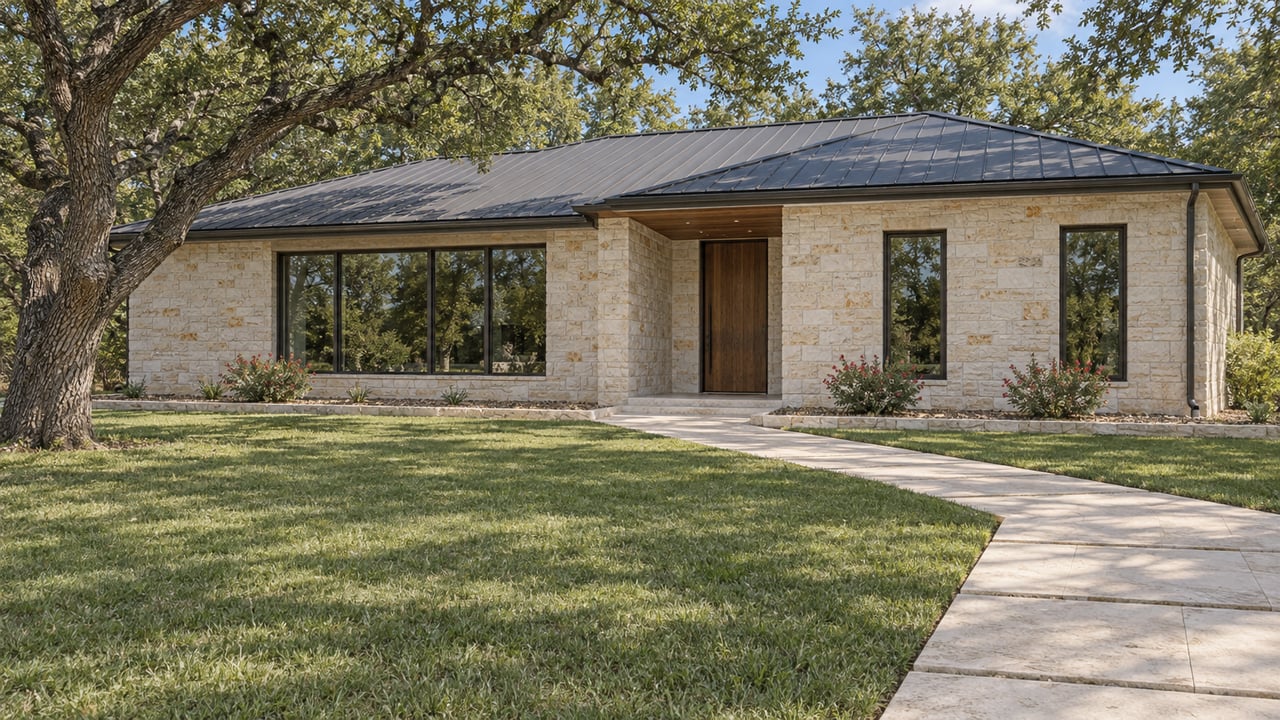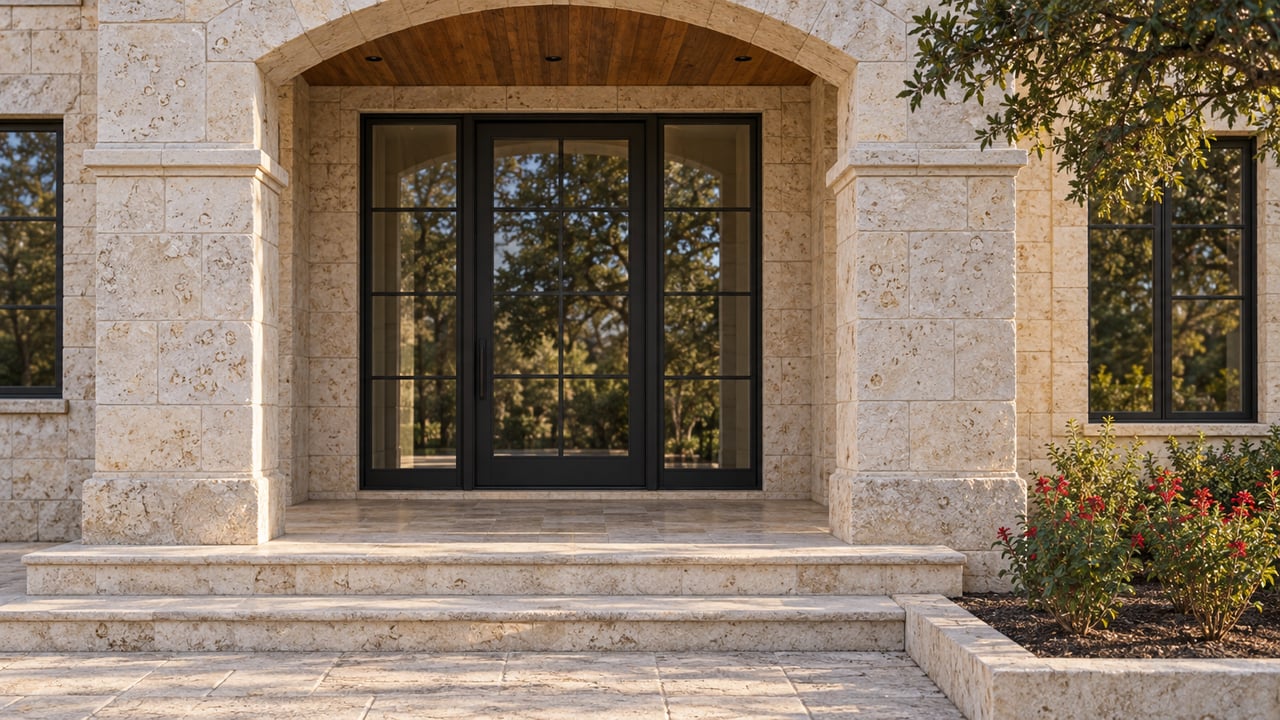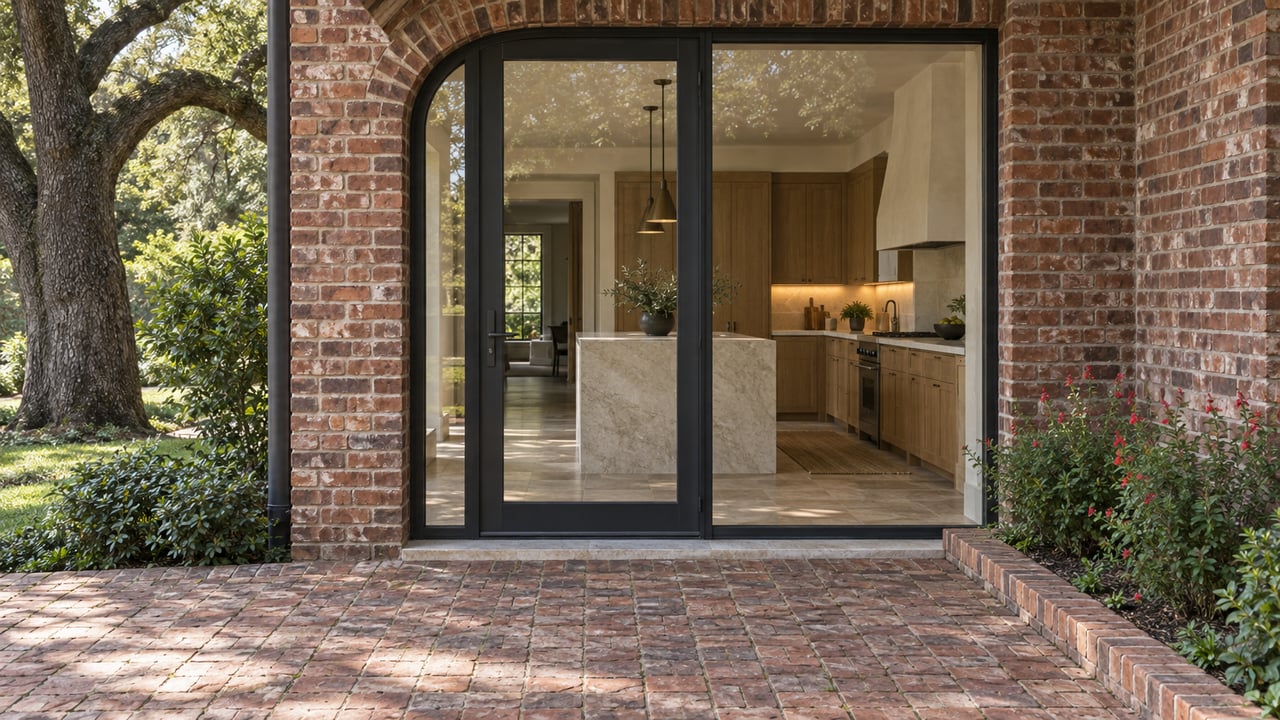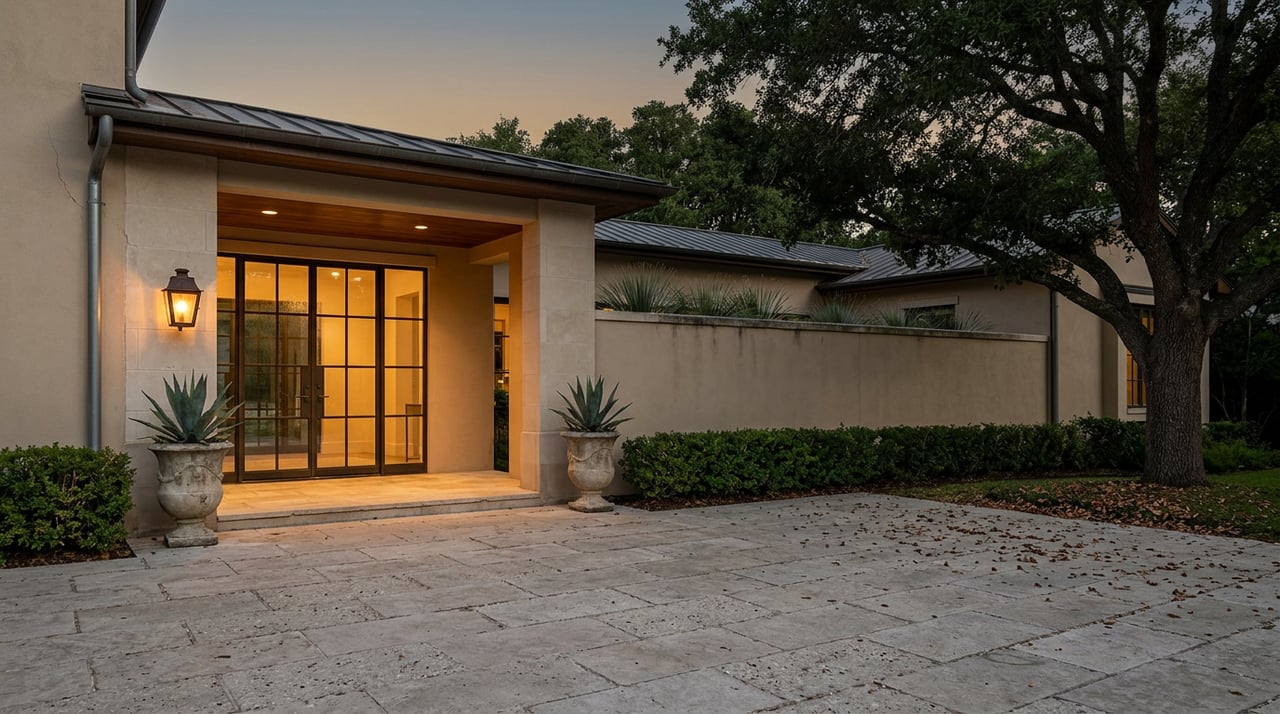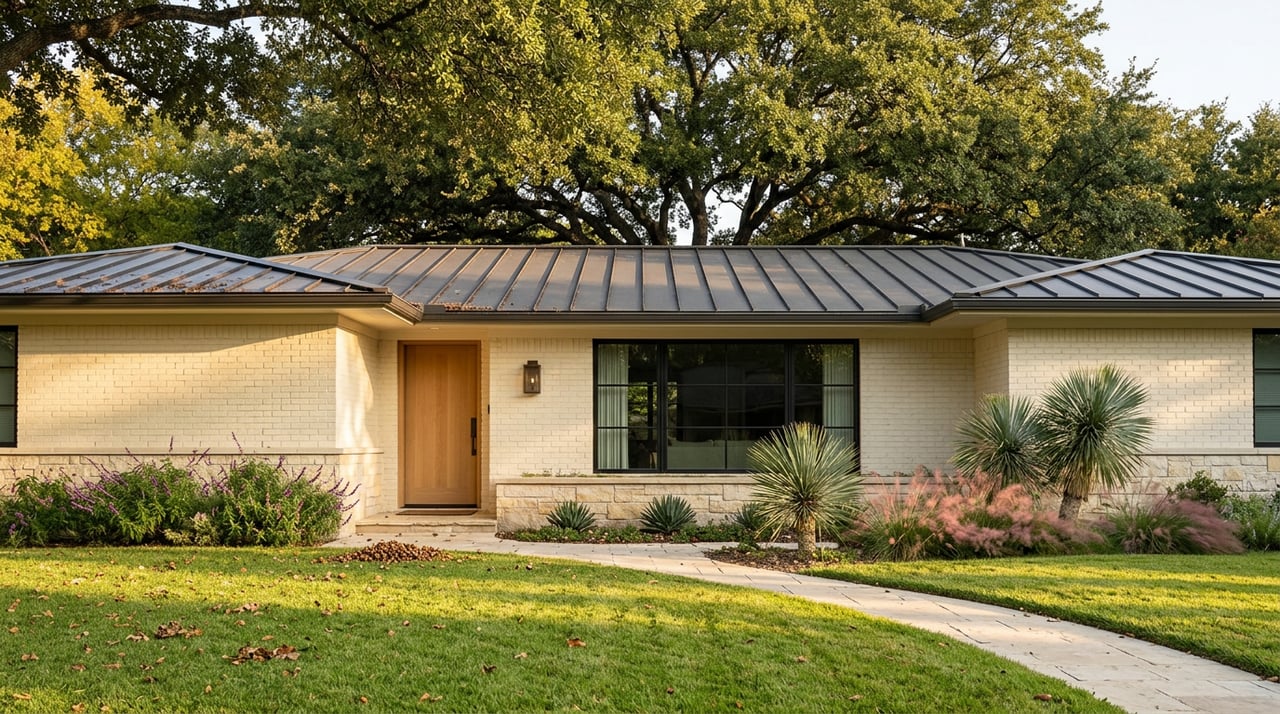
Open any national portal and Terrell Hills reads as a tidy line item. A median list price somewhere around $975,000 in July 2026. Average price per square foot in the low $400s. A median of roughly 126 days on market. Numbers that suggest a settled, legible submarket where you can budget from the top down and shop from the middle out.
That is the wrong way to shop Terrell Hills. In a 78209 pocket where active inventory in July 2026 spans from about $170,000 to $6.5 million across roughly 35 listings, the median is a statistical shadow of a market that does not really have a middle. What you are actually pricing is a lot inside Alamo Heights ISD, plus the optionality to keep, renovate, or rebuild the structure on it. Once you see the transaction that way, the "median" stops helping and the underlying mechanics take over.
The Median That Isn't
A useful median describes a cluster. Terrell Hills does not have one. It has two overlapping markets sharing the same municipal boundary.
| Slice of the July 2026 market | What it looks like |
|---|---|
| Entry point | A sub-$300,000 foreclosure or dated 2-bed on a small lot, sold as-is |
| The "median" band | Renovated 1940s–1960s ranches and traditionals, $700K to $1.2M |
| Rebuild candidates | Tear-down or heavy-remodel homes on quarter- to half-acre lots priced primarily for the dirt |
| New construction | Custom builds by firms like Collier Custom Homes, Signature Homes, and Haven Design and Construction, roughly $1.5M to $2.2M+ |
| Estate tier | Landmark properties on Geneseo, Terrell, Zambrano, and Lazy Lane, $3.5M to $6.5M |
That distribution explains the days-on-market number better than any absorption chart. When Redfin's three-month sale data shows median sale price up around 60% year over year while Movoto's July snapshot shows list price down about 30% year over year and Zillow's ZHVI reports the typical home value up about 3.4% to $916,113, none of those sources is lying. They are each capturing a different sliver of a thin, high-variance market where one $5M closing moves the whole line.
Read the disagreement as the signal. Terrell Hills is not a market you can benchmark from a single number. It is a market you underwrite lot by lot.
What You Are Actually Buying
Terrell Hills is effectively built out. The municipality is a two-square-mile island fully surrounded by San Antonio, its housing stock largely set down between the 1920s and the 1960s, and there is no greenfield left. New supply arrives one lot at a time, either through a full teardown or a "down to the studs" renovation. That single fact reorders everything.
In a subdivision market, the house is the asset and the lot is the pad. In Terrell Hills, the lot is the asset and the house is a temporary use of it. You can see this in how new construction is priced. A recent listing at 820 Canterbury Hill went to market at $1.5M for 3,800 square feet by Collier Custom Homes. A larger Signature Homes build at 625 Canterbury Hill listed at $2.195M for about 5,100 square feet. Both are on interior lots on the same street. The delta is not really "square footage." It is the compounded cost of land plus builder plus finishes on a parcel that will not be replicated.
That is why the foreclosure at the low end of the market and the $6.5M estate at the top are more related than they look. Both prices are anchored to the same underlying land value inside the same school district. The estate has already spent the rebuild budget. The foreclosure has not.
For a buyer, this reframes every showing. The question is no longer "is this house worth the asking price," it is "what does this lot cost, what does the current structure add or subtract from that number, and what would it cost to make the structure match the lot."
The Chapter 14 Constraint
The reason lot value is so durable in Terrell Hills is that the city protects it through code. Any residential building plan submitted after August 13, 2007 must comply with the Residential Design Standards in Chapter 14 of the city's ordinances. Dimensional requirements vary by parcel width, blank-wall articulation is regulated, and lots under 8,000 square feet near the city perimeter fall into a separate A-1 district with its own rules. Ordinance 1545, adopted December 9, 2024, updated the construction codes and standards and expired legacy building and demolition permits by September 30, 2025.
Practical translation for a buyer weighing a teardown or major addition:
- Permits and inspections run through the City of Terrell Hills permitting portal, not the City of San Antonio. Contractors must register with the city before applying.
- A complete demolition permit is a $300 fee line item on top of everything else, with $200 for a partial demolition and a $300 fee to request a hearing before the board of adjustment or the planning and zoning commission.
- Plan review is a real process, not a formality. Every plan is checked against a residential design standards checklist that the city expects to see submitted with the drawings.
None of this is prohibitive. It is a filter. It is why the streets that anchor the top of the market, Canterbury Hill, Patterson, Eldon, Geneseo, Terrell Road, and the Garraty–Arcadia–Wiltshire corridor, still read as coherent architecturally rather than as a patchwork of speculative infill. The code is doing work that a homeowner's association would do somewhere else, and it flows into the price of every lot it governs.
Reading a Terrell Hills Price Tag
Once you accept that you are underwriting a lot, a code overlay, and an existing structure separately, the same July 2026 numbers start to tell a more useful story. Two questions do most of the work.
What is the land worth? Cleared and replatted lots inside the city, roughly 0.4 to 0.7 acre, have listed as build-ready sites priced to reflect Alamo Heights ISD zoning and mature tree canopy. Compare the asking price of a rebuild candidate to the asking price of a nearby cleared lot at the same size. If the delta is smaller than the demolition and site prep budget plus builder margin, you are essentially paying for a house that has zero or negative value in the transaction.
What has the structure absorbed? A 1949 traditional that has been re-plumbed, re-wired, re-roofed, and reconfigured to an open plan is a different asset than a 1949 traditional that has not. That is why a full remodel on Morningside Drive can trade at a real premium over a similar footprint two blocks away. The mid-market cluster around the $700K to $1.2M band is almost entirely defined by how much rebuild the previous owner already paid for.
That framework also explains days on market. When the median sits near 126 in July 2026 and Movoto reports a median of 78 days for the broader listing set, the spread is driven by rebuild-tier and estate-tier homes that need the right buyer, not by the mid-market renovated houses that clear faster.
Where the Signals Disagree, and Why That Matters for Your Offer
A buyer walking in with a preapproval and a spreadsheet built off national portal comps is going to find the negotiation confusing. Sale-price and list-price series are moving in opposite directions in the same month. Price per square foot varies by more than $100 depending on which slice of inventory the data provider is weighting.
Two takeaways from that noise are actionable.
First, comps in Terrell Hills should be selected by lot and by structural condition, not by ZIP code average. A closed sale on a 0.25-acre interior lot with a 1950s ranch that never got a full remodel tells you almost nothing about a 0.5-acre corner lot with a 2017 rebuild.
Second, seasonality matters more than the annual print suggests. The 78-to-126-day medians in mid-2026 mean sellers have absorbed longer marketing timelines and buyers have room to negotiate on the rebuild-candidate tier, where carrying cost weighs on the seller. The mid-market renovated cluster is where speed still matters.
Quick FAQ
Is Terrell Hills the same market as Alamo Heights or Olmos Park? No. They share the Alamo Heights Independent School District and a broadly similar buyer profile, but Terrell Hills is its own municipality with its own police, fire, permits, and residential design standards. That regulatory separation is part of what you are buying.
Do the July 2026 price declines on some data sources mean values are falling? Not in a straightforward way. The Zillow Home Value Index for Terrell Hills was up about 3.4% year over year as of June 30, 2026, while list-price medians on other portals were down year over year and Redfin's three-month sale median was up sharply. The mix of what is on the market and what is closing in any given month swings the reported number more than underlying value in a submarket this thin.
Is a foreclosure or heavy fixer worth pursuing here? It can be, but only after you have priced the demolition or renovation, the Chapter 14 design standards that will apply to your plans, and the realistic build timeline through the city's plan review. The upside is real. So is the underwriting work.
How much new construction is actually available? Very little at any moment. New listings in Terrell Hills in mid-2026 are running in the low single digits, concentrated on the Canterbury Hill, Garraty, and Patterson corridors, and typically priced from $1.5M into the low $2M range depending on lot and builder.
The Terrell Hills market rewards buyers who can hold two numbers in their head at once, the price of the lot and the cost of the structure, and who know which streets, which builders, and which condition tiers those numbers behave differently on. That is the work behind a confident offer here.
If you are weighing a purchase, a sale, or a rebuild inside the 78209 corridor and want a lot-by-lot read rather than a portal average, Nathan Dumas with Phyllis Browning Company is available for a private conversation. Let's Connect.